
How Wholesale Distributors Are Scaling with Odoo ERP
Discover how wholesale trading companies use Odoo ERP to automate multi-warehouse inventory, B2B sales portals, and supply chain management
ERPODOO ERP & SUPPLY CHAIN
2/25/20262 min read
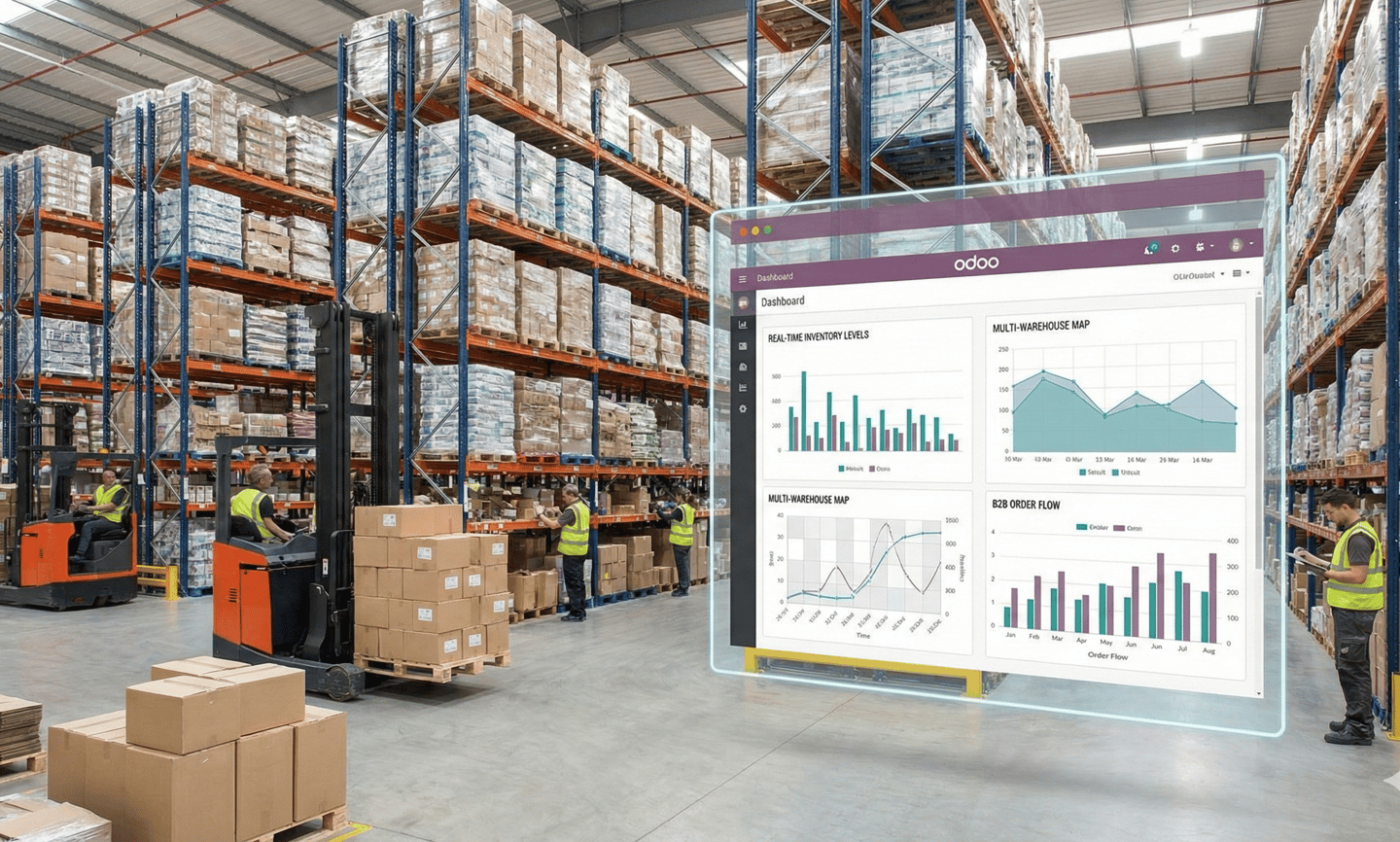
If you run a wholesale distribution or trading company, you know that your margin for error is razor-thin. When you are moving high volumes of goods, a single inventory miscalculation or a delayed B2B order can cost you thousands of dollars and damage a client relationship permanently.
Many distributors hit a "growth ceiling." They try to manage multiple warehouses, B2B pricing tiers, and vendor lead times using a mix of basic accounting software and giant Excel spreadsheets. It works until you reach a certain scale—and then it breaks.
This is why trading companies across the GCC, CIS, and global markets are migrating to Odoo ERP. Here is how implementing Odoo specifically transforms wholesale distribution.
1. Real-Time Multi-Warehouse Management
When you have stock in transit, stock in a primary warehouse, and stock at a 3PL (Third-Party Logistics) provider, answering the simple question, "Do we have this in stock?" becomes incredibly difficult.
Odoo’s Inventory app is built on a double-entry system. This means it tracks exactly where a product is at any given micro-second.
Automated Reordering: Set minimum stock rules, and Odoo will automatically generate Purchase Orders (POs) for your vendors before you run out of fast-moving goods.
Smart Routing: Automate drop-shipping, cross-docking, and multi-step routing directly from the interface.
For Wholesale Trading businesses, this level of inventory accuracy eliminates dead stock and prevents stockouts.
2. B2B eCommerce & Customer Portals
Your B2B clients don't want to call your sales reps to place routine reorders or check invoice statuses. They want a self-service experience.
With Odoo, you can launch a dedicated B2B portal.
Your wholesale clients can log in, view their specific negotiated price lists, check real-time stock levels, and place orders directly into your ERP.
No more manual data entry for your sales team. The moment the client clicks "Order," the picking ticket is generated in the warehouse, and the invoice is pre-drafted.
3. Advanced Pricing & Margin Control
In wholesale, not every customer pays the same price. You might have volume-based discounts, seasonal promotions, or special rates for VIP distributors.
Managing this in spreadsheets leads to human error. Odoo allows you to set complex Pricelists. You can configure rules that automatically apply a 10% discount if a customer orders more than 500 units, or apply specific price lists to customers in different countries in their local currency. Most importantly, you can see your true profit margins on every single sales order in real-time.
4. Seamless Accounting Integration
In legacy systems, the warehouse doesn't talk to the accounting department. In Odoo, the moment a product leaves your warehouse, the cost of goods sold (COGS) is updated. When an invoice is paid, it instantly reconciles with your bank feed. This unified approach cuts month-end closing times in half.
The Implementation Partner You Need
Software is only as good as the team that sets it up. Because wholesale workflows are highly specific, you need an implementation partner who understands supply chain mechanics, not just code.
At Rising Technologies, our Odoo Implementation Services are designed to map your exact physical warehouse processes to your digital ERP environment. We ensure your data migration is clean, your staff is trained, and your system goes live without disrupting your daily operations.
Stop letting inventory chaos hold back your growth. Contact Rising Technologies today to schedule a custom Odoo demonstration for your wholesale business.